
Supplier
Oasis
Design
System
Overstock.com
the problem
Our product management system for suppliers, Supplier Oasis, was such an inconsistent experience that it was a difficult tool for our suppliers to use. Each page had been historically managed by a different team and there was no real cross collaboration between the teams.
Research
I Performed an interface inventory of the current system to better understand where we were. I Spoke with key stakeholders about what pain-points they felt existed in the current product and about level of refresh was realistic. I also sat with both internal and external users to find the internal work arounds as well as discover what needs our internal users had that were not being fulfilled by the current state of the product.
Job to be done
We decided that the key job to be done was to create a consistent experience and design language across any product that our Suppliers touch. Furthermore the design system needed to be able to expand where and when needed. The design system and development guidelines also needed to be simple and convent to access.
My Role
I was the lead UX Designer on this project. I did user research, analysis, testing, wire-framing, prototyping, and generated the final designs and requirements. Thought-out this project, I also collaborated with project managers, developers and data analysts.
DESIGN INVENTORY
I conducted a design inventory of the current state of Supplier Oasis to better show stake holders and upper management how the design and interaction pattern discrepancies were affecting the usability of the product. Blow are some examples of what was found during the design inventory.


DESIGN SYSTEM full picture
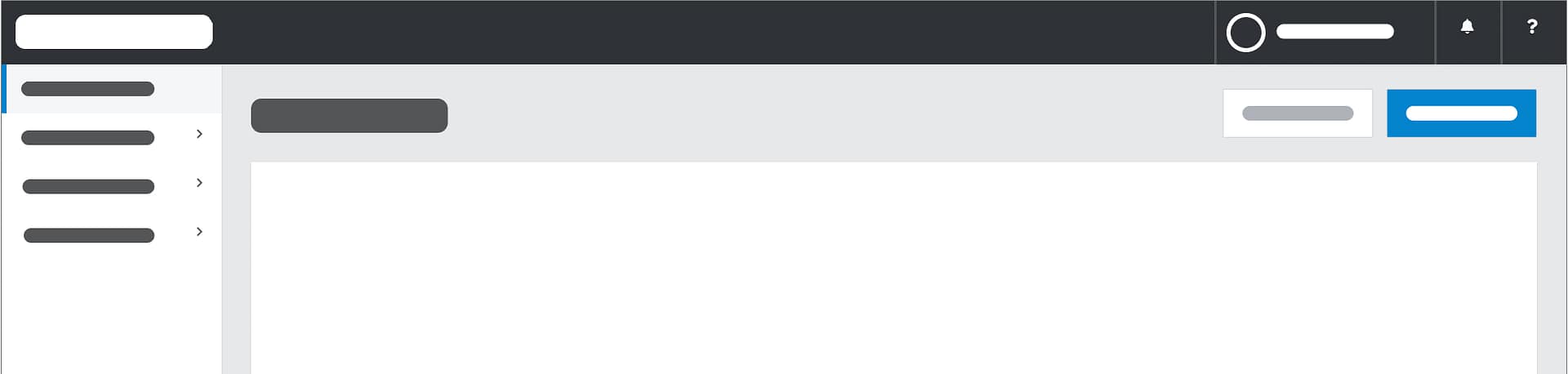
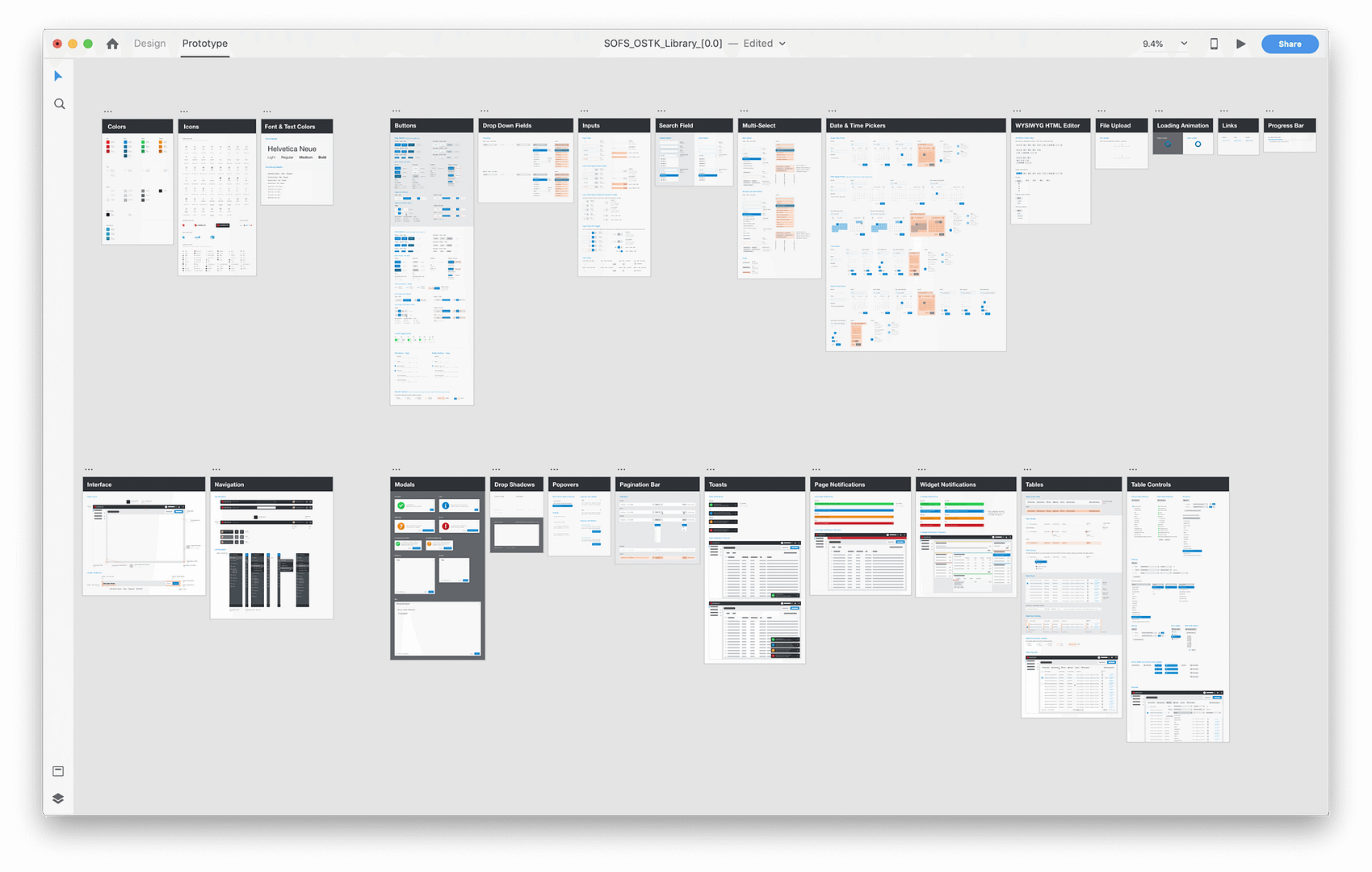
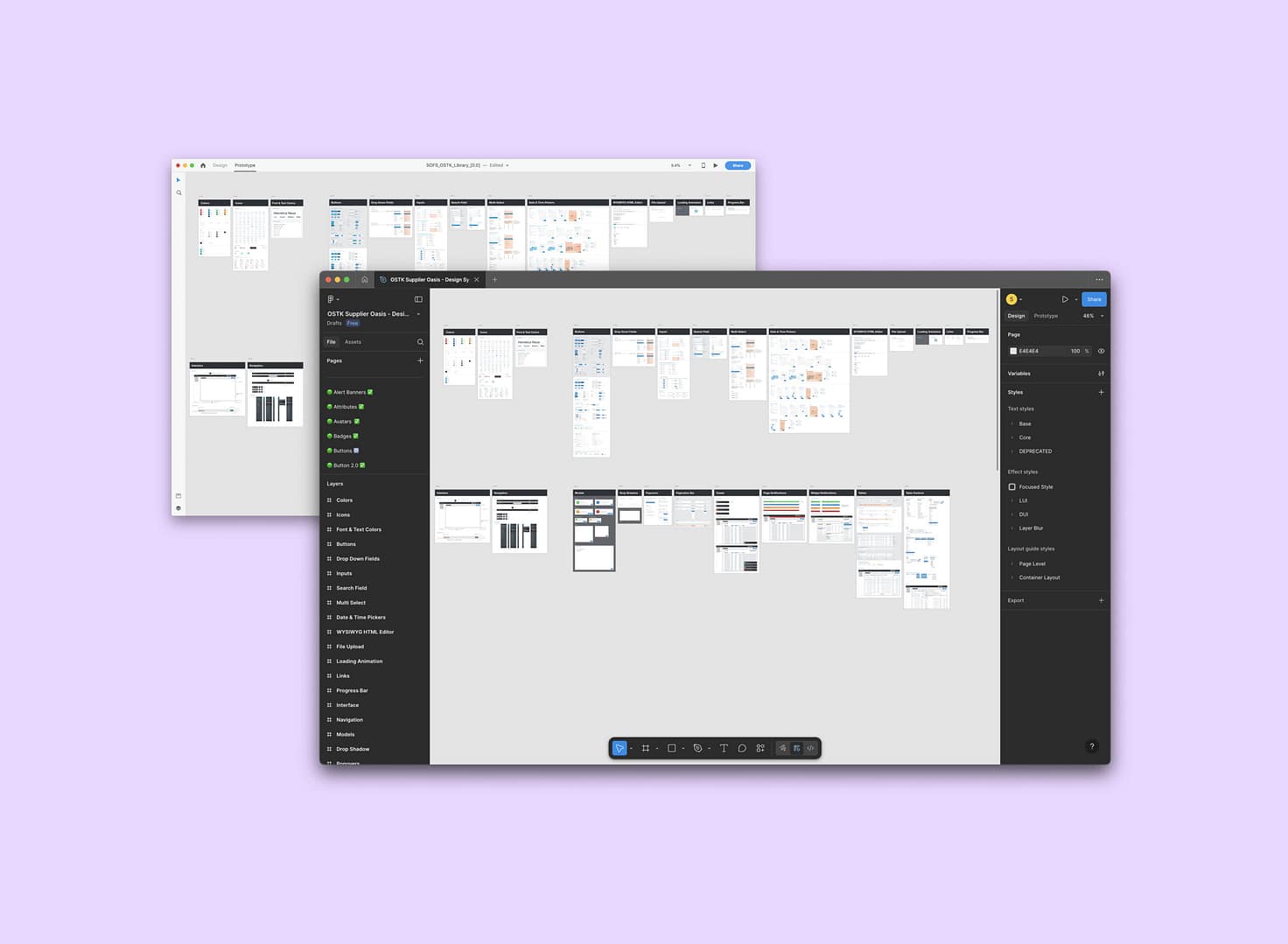
I set up the basic interaction patterns and the core design guidelines for the most common interfaces starting with the shell of Supplier Oasis. This screenshot shows the whole design system. There was an agreement that all new pages would use the new system. Furthermore any time an existing page was worked on by engineering there would be time allotted to update the page using the new systems common components.
DESIGN SYSTEM components
These are some of the final components of the new design system.


RESULTS &
TAKEAWAYS
the problem we had
Our product management system for suppliers, Supplier Oasis, was such an inconsistent experience that it was a difficult tool for our suppliers to use. Each page had been historically managed by a different team and there was no real cross collaboration between the teams.
Research
I Performed an interface inventory of the current system to better understand where we were. I Spoke with key stakeholders about what pain-points they felt existed in the current product and about level of refresh was realistic. I also sat with both internal and external users to find the internal work arounds as well as discover what needs our internal users had that were not being fulfilled by the current state of the product.
Takeaways
We were able to reach an agreement with our engineering group that all new pages would use the new system. Furthermore any time an existing page was worked on by engineering there would be time allotted to update the page using the new systems common components. This allowed us to move to the new system in a way that worked for all stakeholders.
Still looking? Here's more of my work
© Steven Jeppesen 2026